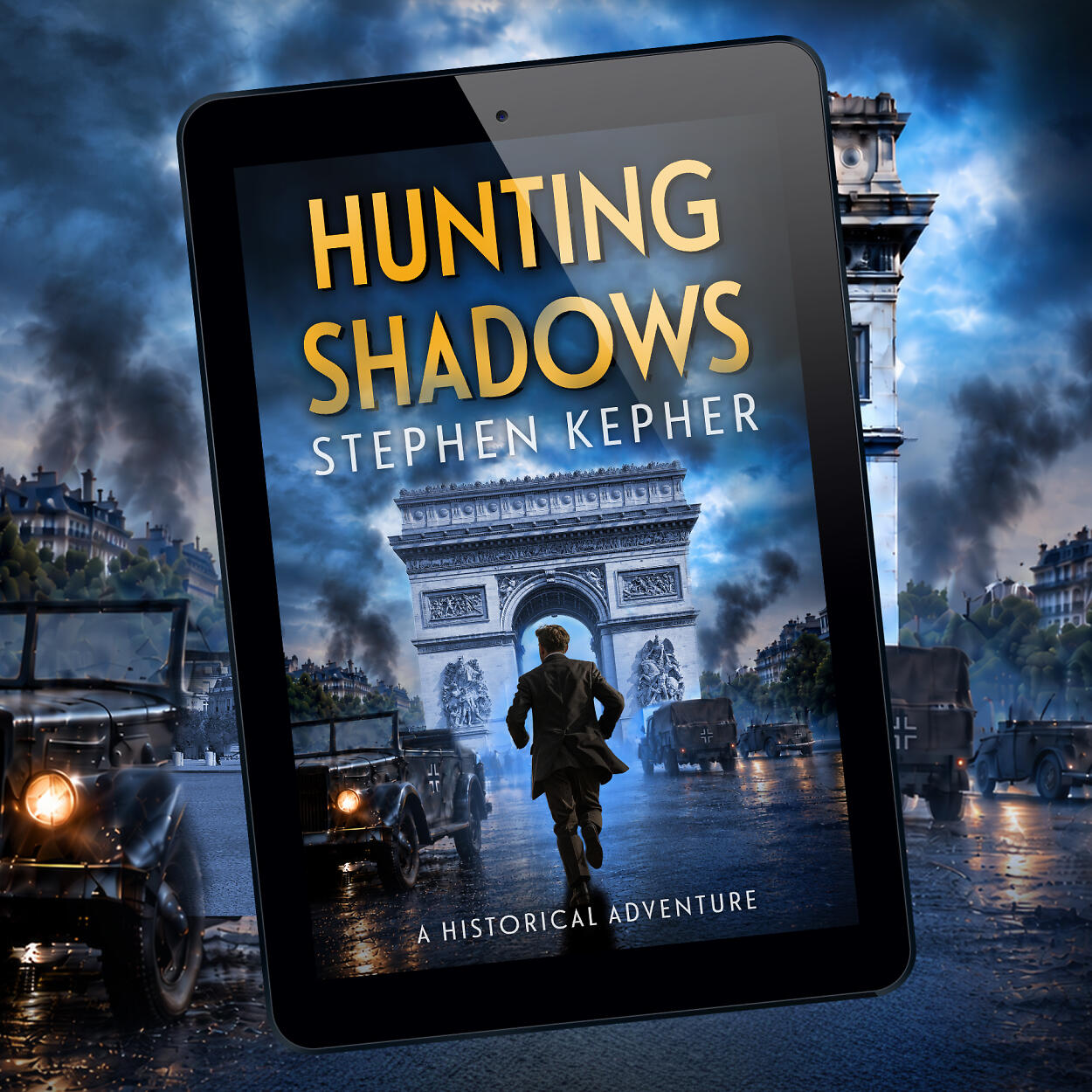

Interview Author Stephen Kepher answers our questions

What is your name and what do you write?

My name is Stephen Kepher. My current book is called Hunting Shadows, a World War II story of espionage and betrayal. My first book was a non-fiction history of the political and strategic debates that surrounded the planning for the cross-Channel assault that everyone calls D-Day. That book was titled COSSAC: Lt. Gen. Sir Frederick Morgan and the Genesis of Operation Overlord.

Tell us about your protagonist in Hunting Shadows, JJ.

JJ is an American expat, who has lived and worked in Paris for 20 years. He is 41 years old in 1940. He is a very successful fine arts dealer and gallery owner, one of the favourites of the rich and powerful. Since his wife died in a traffic accident in 1934, he has used his business and the benefits of success (expensive clothes, good food, fine wine) as an emotional shield.

JJ enjoys food that is well prepared, it doesn’t have to be rich or fancy – a well-made cassoulet delights him. He is also well-read and he quotes poets, philosophers and playwrights to good effect. He spends much of his spare time swapping stories with the head bartenders at the Ritz and at the Lutetia, on the Left Bank – near his apartment in St. Germain des Pres. He is at his happiest when on the Left Bank. His neighbourhood is his home. While his parents live in New York City, he feels no connection to the US, the idea of ‘hot dogs for lunch, too much Glenn Miller, not enough Duke Ellington …’ holds no interest for him.

He is five-foot ten, with dark russet hair that has just a hint of grey at the temples. He gives the appearance of someone who ran track in high school. While not flamboyant, he enjoys occasionally challenging convention (again) when it comes to what he wears and who he counts as a friend. JJ also has a knack for making the ladies smile.
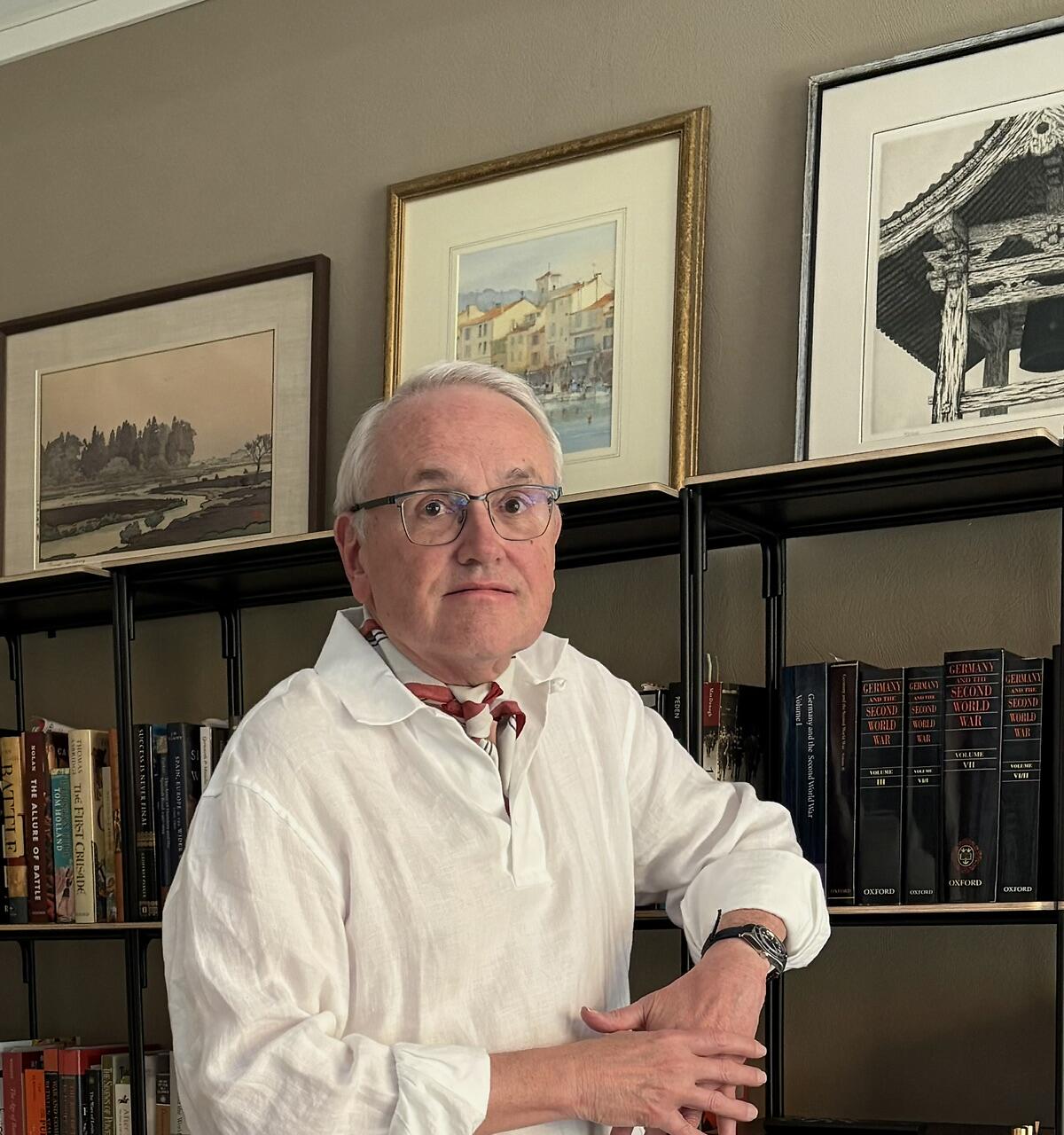
Stephen Kepher, author of "Hunting Shadows"

What made you want to set much of the story in the 6th arrondissement of Paris?

It is our favourite neighbourhood in the French capital, and we’ve been visiting there for over twenty years. In many ways it feels like ‘our’ neighbourhood. Now when we visit, we will stop into a shop, restaurant or hotel just to say hello to people we’ve gotten to know over the years. Like JJ, I do have a favourite barman at one of the district’s better hotels, as well as a couple of always-have-to-visit restaurants.

What was the spark that led to writing Hunting Shadows?

The idea for the book came from a number of sources. One was visiting the Museum of the Liberation of Paris and becoming interested in what daily life under the Occupation must have been like. Another was a conversation I remembered having with MRD Foote, the historian of Special Operations Executive in WWII, at a conference. He pointed out that those who ‘went to the woods’ in his phrase, didn’t fit into a simple category; some were young, some were old, educated, not educated, politically conservative, radical, male, female, lived in the country or in the city. The one trait they had in common was being bloody-minded. They simply refused to accept the Armistice and German domination. A third strand was thinking about the question – ‘what would resistance to the Occupation mean, particularly in 1940, by someone who has lived a comfortable life, without struggle?’

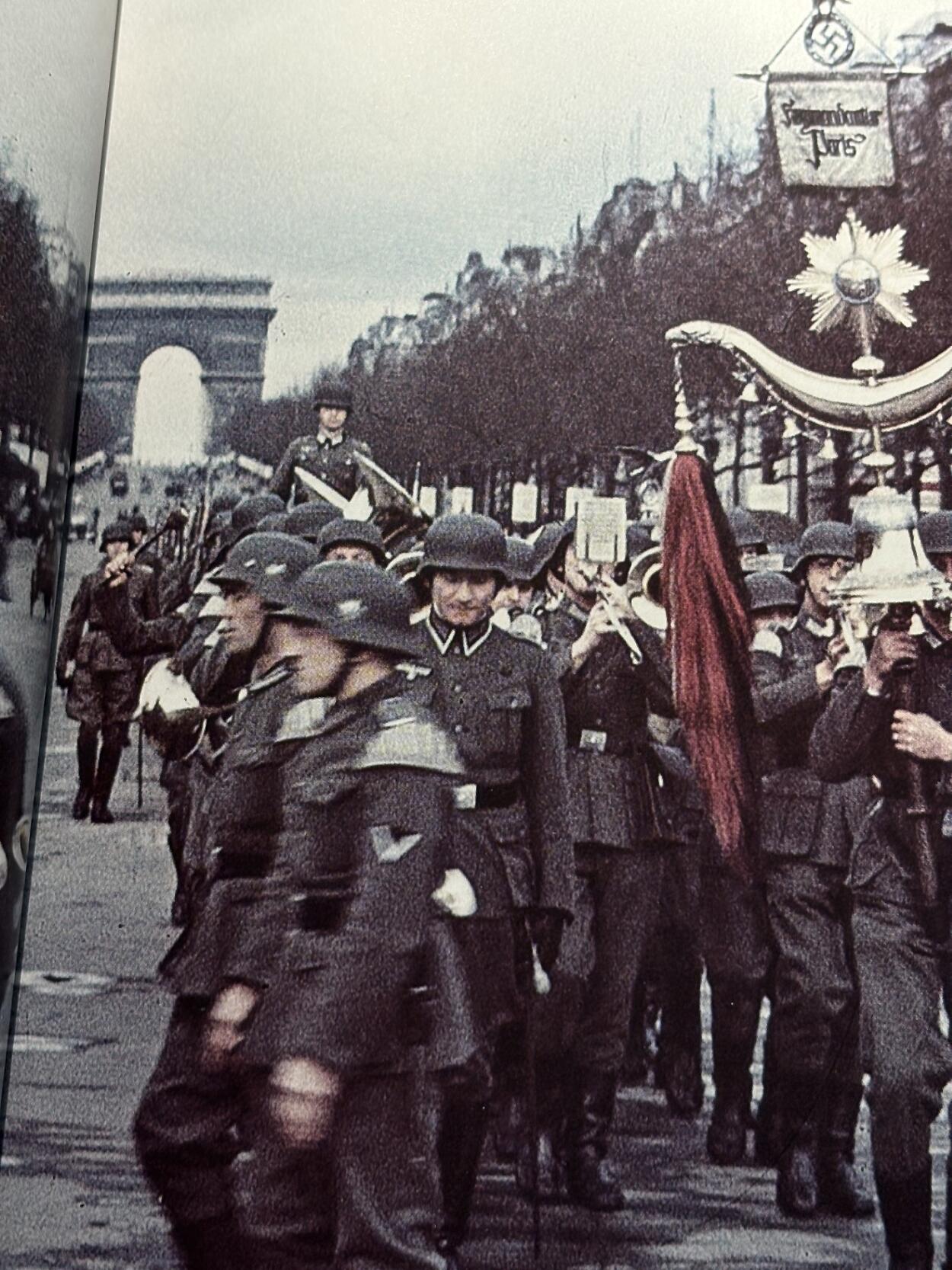
Visual extra from an edition of "Le Parisien"

What does your writing process look like?

I have a study with windows that look out onto the balcony of our apartment and beyond to a large green space with mature trees. I have books and other reference materials near at hand. I usually start after lunch and work until about six in the evening. First, I read the story from the beginning, revising and editing as I go. I try to write a complete chapter at a time – or at least part of a chapter with notes indicating where I think the story will go from there. I work following a story outline that I’ve already created – although that is subject to change as I realize that additional information is needed or something is superfluous. Sometimes, I discover that I need a new character or sub-plot, and then I need to find where exactly in the story that should be placed.

There are times when I can’t just power through a creative dead space. The best thing I can do when that happens is just walk away. Literally, go for a walk, take on another project, maybe my wife and I will go to a restaurant for lunch. Sometimes, over dinner, we’ll talk through the story, do the characters’ actions make sense, what’s the motivation, where are the inconsistent bits, am I lingering too long in the scene? Her common sense is an essential part of the process.

Any other fun facts from behind the scenes?

I was surprised by how little support, either in France or in Britain, the ‘Free French’ had in 1940 and 1941. I knew that there was a political contest over who was in charge and what were they in charge of, but I didn’t realise the depth of the contest. Nor did I realize the important role that the French colonies, particularly in Africa and the mid-East played.

The biggest challenge I had in writing this book was learning how to write fiction. While both fiction and non-fiction are about the telling of a story, creating a fictional world that feels real, and following the various ‘rules’ of writing fiction – or intentional disregarding them, took many iterations to get right.