
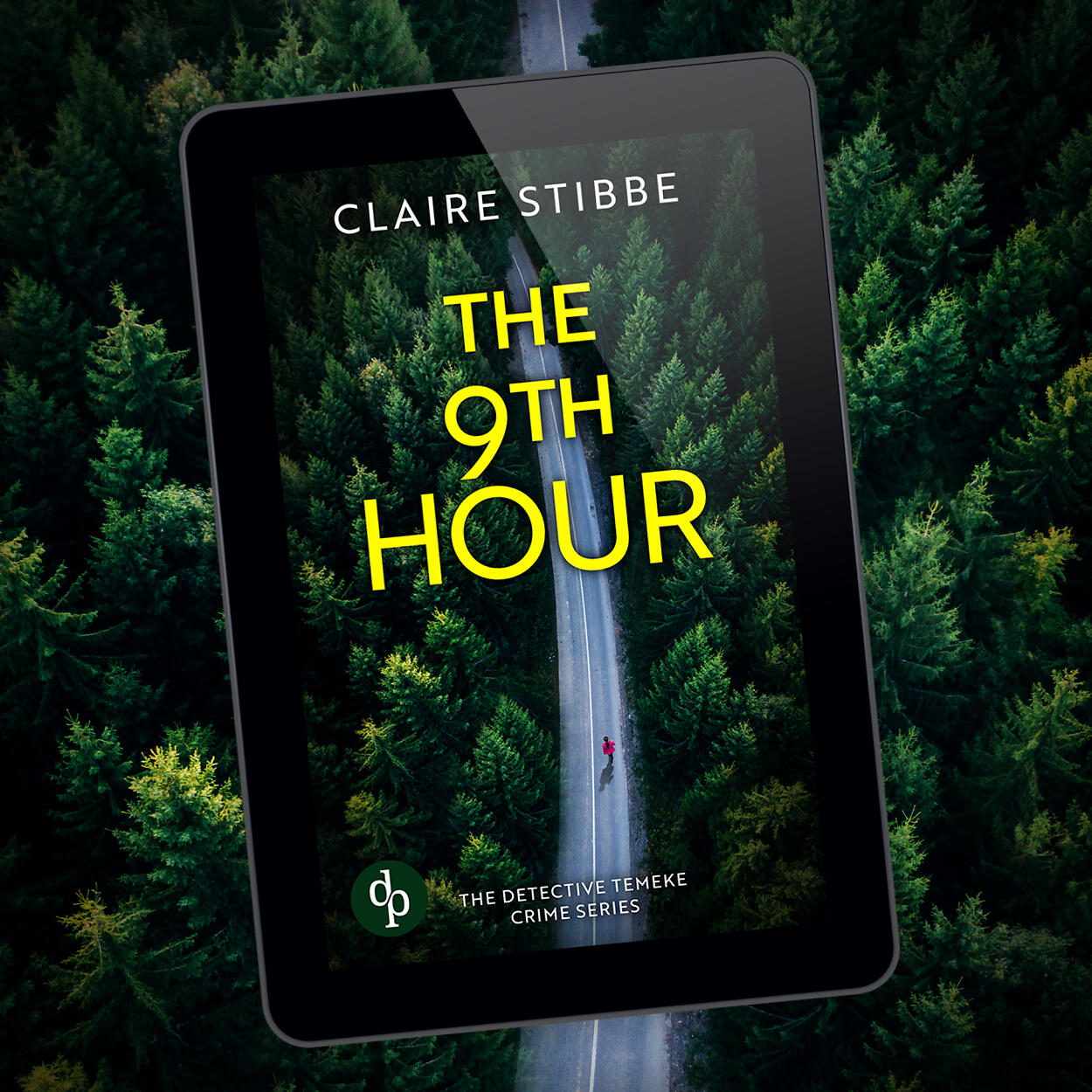

What is your book The 9th Hour about?
It’s about a British detective who is an FBI Behavioral Analyst specialising in crimes against children. When a detective is killed by the 9th Hour Killer—a perpetrator intent on kidnapping young women—David Temeke is called in to replace him with his new partner, Malin Santiago.
What inspired you to write this gripping detective thriller—and how did the number nine become such a haunting element in the story?
I’ve always loved detective fiction and watched murder mysteries on TV, namely Colombo. This extraordinarily observant detective with his tatty old raincoat and cigar, and the catchphrase, ‘Just one more thing,’ was the highlight of my week. I still binge-watch him today.
As for the number nine: At the time, there were a few cases of kidnapped children from state parks across the US, notably during family camping trips. One victim was only nine years old, and as a mother, this case haunted me for months.
Detective Temeke is such a compelling character. How did his personality take shape in your imagination?
Being British myself and having lived in Albuquerque for 27 years, Detective Temeke’s character was very personal to me. I wanted to create someone on the outside looking in. So, I made him British, living on the west side of Albuquerque near the Rio Grande River.
A strong character, he tries and fails to fit in with a closed circle of police elite, and the New Mexico culture in general. But he doesn’t let it bother him because he’s more focussed on solving crimes rather than adhering to conventional protocols. His humour stems from the interplay with other officers in the Northwest Area Command. The arrogant Captain Fowler and desperate-to-retire Unit Commander Hackett, to name a few.
The setting in Albuquerque and Cimarron State Park adds a lot of atmosphere. Why did you choose this location for the investigation?
I think the rugged beauty of the landscape, the narrow-forested canyon, the granite palisades, and the river cutting through it, make for a natural setting. At times, there can be a moody, broody atmosphere and that’s what I tried to create.
This is a thriller with some dark twists. Was there a particular scene that was especially intense or challenging to write?
The scene that really challenged me was writing the grieving father of the nine-year-old girl. It’s never pleasant to dig deep into intense panic and heartache, especially the type that might build hope one minute and dash it the next. This particularly character was a widower, therefore, he had lost so much. Hence the need to write a pastor to offer comfort and guidance.
You weave Norse mythology into a modern serial killer case—what drew you to this unusual combination?
When writing about a nine-year-old, it’s the what if moments that kept my mind whirring around the number 9. What if the perpetrator were Scandinavian and the number held some kind of symbolic importance to him?
It got me thinking about Odin in Norse Mythology where the number 9 is associated with magic, the circle of life and death, and of completeness. I think this is what got the ball rolling.
Temeke and Santiago make a great team. What do you enjoy most about writing their dynamic?
Where Temeke’s character arc starts off as bristly with a tendency for impatience, (and far too many cigarettes) Malin is level-headed and a health freak. She doesn’t allow Temeke to smoke in the car and keeps him on track, by driving to his house every day to pick him up. She admires Temeke and wants to learn from him. This makes them a good team.
Your killer is terrifyingly methodical. How did you research or construct such a chilling antagonist?
A combination of reading piles of crime fiction, especially from the late 70s and early 80s and joining the Albuquerque citizen’s police academy. This was an intensive twelve-week program, including presentations from Homicide, Crime Lab, Narcotics, K-9, SWAT and “ride-alongs” with the officers themselves. It’s not for the faint-hearted, especially when viewing victim and crime scene photos, and learning about every facet of crime.
The theme “everyone has secrets” runs deep in this book. Why do you think hidden truths are so powerful in fiction?
People love secrets and suspense because it involves piecing together an intricate puzzle, especially one that involves characters they can relate to. I’ve also noticed a curiosity for things that aren’t what they seem, something that challenges what we believe to be true versus reality. There’s something very impactful about it.
How do you maintain suspense across a fast-paced investigation like this without giving too much away too soon?
I think there’s an art in drip-feeding just enough crumbs to keep the reader turning the pages. I’m still not there yet, but I’m learning.
Can readers look forward to more cases with Temeke and Santiago in the future?
There are six books in the series, so, yes! Could there be a few more? Let’s wait and see.