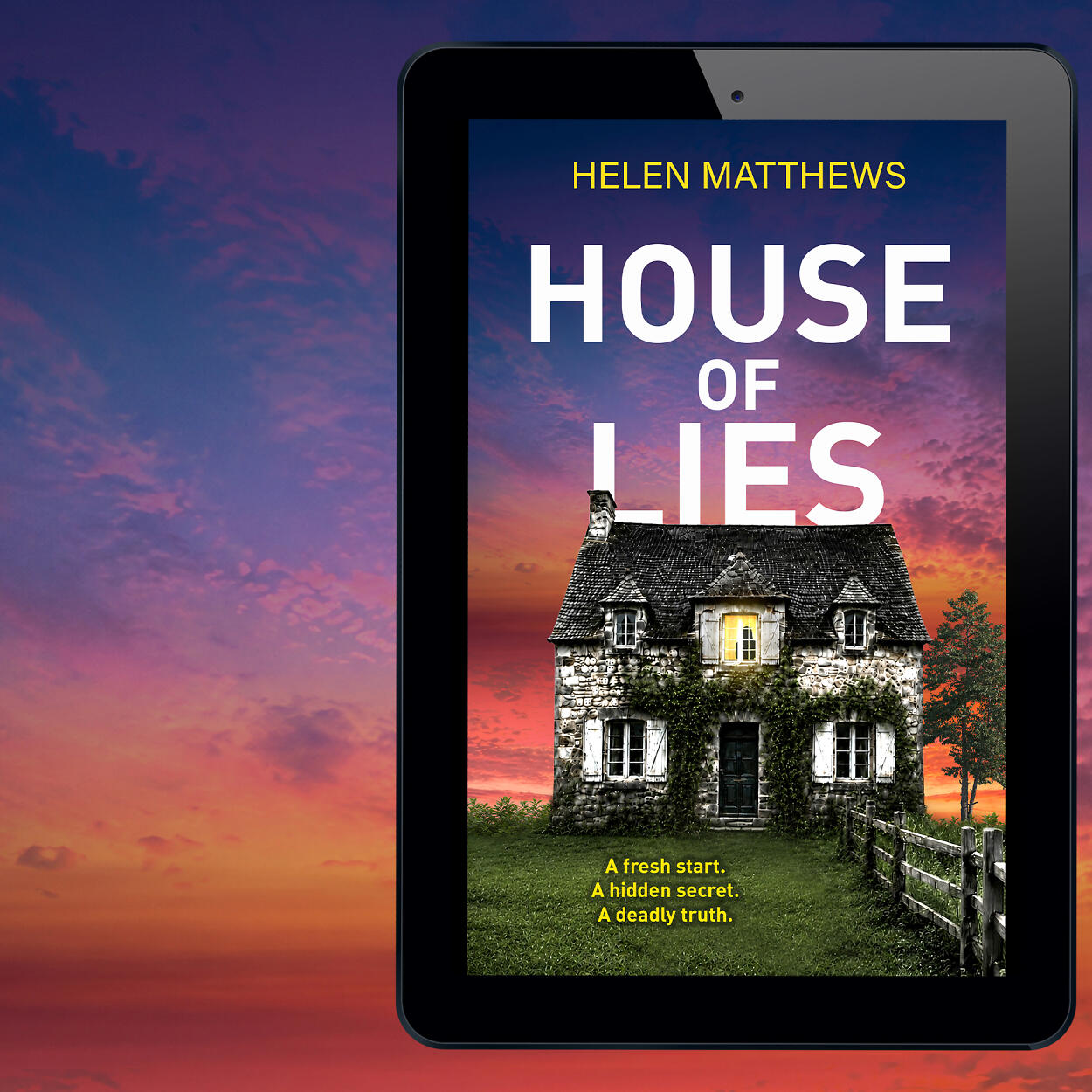
What is your new thriller House of Lies about?
Emma has overcome plenty of obstacles in her life, from student bride to single mum of a son, Owen, but she has found happiness with her second husband, Paul and another child, Mollie. Emma’s dark days seem far behind her until a fatal accident happens at Paul’s work and he is held responsible.
On holiday in France, trying to leave his problems behind, Paul’s behaviour turns erratic. On impulse, he buys a cheap, dilapidated property and, to Emma’s dismay, persuades her they can renovate it into a holiday home.
Back in England, their problems spiral out of control. Paul is unravelling—professionally and personally. Finally, they escape to France, but clouds are also gathering on the political front as the UK votes to leave the EU and the family face uncertainty in more ways than one. Funds for their renovation project dry up. Paul returns to England to take short-term contract work and Emma battles on alone.
As the couple strive to renovate their marriage, their French ruin and to open a small business, shadows from the past threaten their happiness and safety.
Escape to a new life in France seemed like the only solution, but means heart-breaking loss. When danger threatens, Emma must fight to protect herself and save her daughter.
But, after all, how can you build a new life on toxic foundations?
House of Lies is set in Limousin. What inspired you to write a book set in France?
The idea for this novel came to me when I was on a writers’ retreat at Gladstone’s Library in North Wales. I absolutely love France and had always wanted to write something about my family’s experience of impulse-buying a tumbledown farm building in the Vendee, thinking it would be easy to turn it into a modest holiday home (It wasn’t). Over two decades of renovating our ruin and visiting France we met many people from the UK who had followed their dream to move to France and start a new life. This got me thinking about whether their dreams worked out. Many British people we met had young families and wanted an affordable rural life, in a safe area and a good education for their children. Some people adapted and loved the life. Others took their unhappiness with them and ended with a worse outcome because they’d burned their bridges and couldn’t afford to return to the UK. The idea for the novel House of Lies (originlly published as Lies Behind the Ruin) came from that.
I didn’t want to set the story in the area of France where we have our holiday house so chose the Limousin because I have been to Limoges and the surroundong area many times. The scenes set in Limoges are real places but the village of Sainte Violette where Emma and Paul move to and run the bar is fictitious.