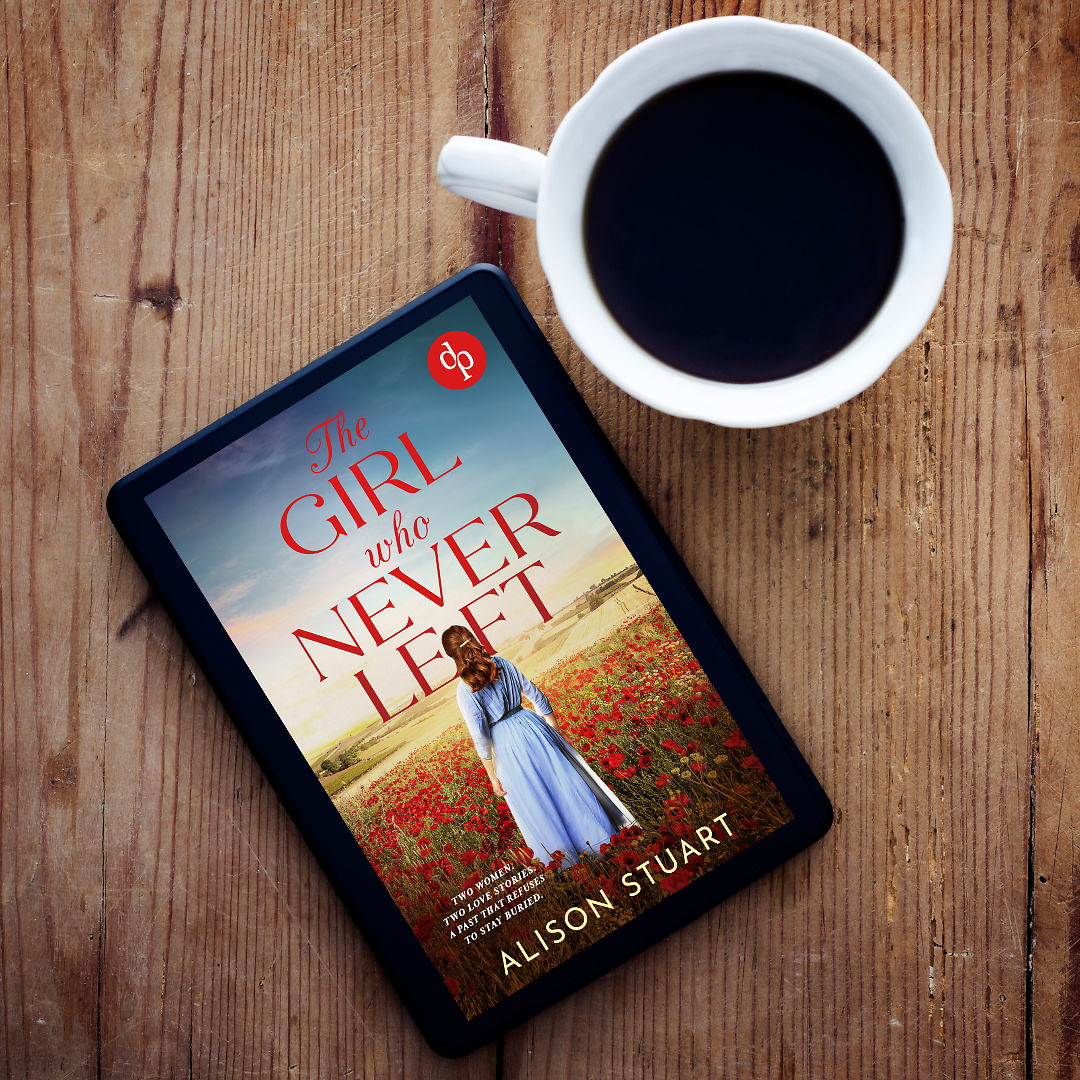

What is your book The Girl Who Never Left about?
Set in post World War One, Australian war widow Helen Morrow visits the family home of Charlie, her deceased husband, for the first time. Only to be greeted by his resentful and bitter mother. The fact that Helen is Australian is enough to turn Lady Evelyn Morrow and her circle against the colonial interloper. Helen’s only ally is Charlie’s cousin Paul, a recluse recovering from his own war injuries and tortured by painful memories of the trenches. When eerie manifestations begin to haunt the pair, it’s easy for Paul to dismiss them as nothing – or perhaps as symptoms of his battle-related trauma. But as ghosts from both the recent and the distant past encroach, Paul and Helen are drawn together in a bid to solve a centuries old mystery and lay their ghosts to rest.
What inspired you to create the historical setting of England in 1923? Was there a particular event or aspect of that era that captivated you?
I love this period of history… that transition between the mannered golden days of the Edwardian era and a world that had been turned upside down by World War One. I wanted to explore the lingering impact of the war on those who survived.
The story revolves around Helen Morrow’s quest for answers about her late husband and the mysterious diary she discovers. How did you develop Helen’s character and her emotional journey throughout the novel?
World War One looms large in the Australian psyche and, after years of writing stories set in the 17th century, I really wanted to write an Australian character. Placing even a well bred Australian girl into the stultifying but sadly diminished Edwardian atmosphere she finds herself, proved a good basis for a stranger comes to town story. Her uniqueness highlights the attitudes of the older characters and breathes life into the inhabitants of Holdston Hall. She also represents that generation of young women who lost their futures … husbands, fathers, brothers, fiancés … those men who never came back. Left with a child to raise alone, I wanted to explore her resilience to the situation she found herself in.
The novel features a mix of romance, mystery, and historical fiction. How did you balance these elements to create a compelling and cohesive narrative?
I call this my ’mystery, history, romance … and ghosts’ book. I really did throw everything at it and crafted the sort of story I like to read – a well researched historical with a hard fought romance to carry the reader along. That is all very well but I needed a good reason to bring the characters together so I took the opportunity to introduce a touch of paranormal and a compelling mystery to give the protagonists a purpose. I had a lot of fun writing it!
Paul, Helen’s husband’s reclusive cousin, plays a significant role in the story. What motivated you to include a character who is still haunted by the shadows of the war, and how does his presence impact the plot?
Paul is a key character because he is the first-hand witness to the horrors of the trenches (and the only witness to Charlie’s fate). I know from family stories that no one who fought in the trenches in WWI came back unaffected. Paul is haunted … not just by the ghosts at Holdston Hall but by his experiences. These days we would call it PTSD … back then it was labelled shell shock (a label he dismisses). With my interest in military history and having walked his battlefields, I felt very close to Paul. Also I love stories with wounded heroes because it allows them to have a vulnerability that a man, such as Paul, probably wouldn’t have if it had not been for the war.
The diary that Helen finds is a key element in the story. How did you approach creating the diary’s backstory and integrating it into the main narrative?
I wrote the diary as a single document, exactly as the author would have done. It served the useful purpose of fleshing out the backstory to this part of the plot. Not all of it was used in the book (readers will be pleased to know).
Helen’s experience of sensing a lingering presence adds a supernatural element to the story. How did you decide to incorporate this element, and what effect did you want it to have on the reader?
I love a good ghost story and I make it my mission to do ghost tours of towns I visit. In incorporating the ghostly aspect, I (hope) I conveyed the sense that the recent conflict had stirred the memories of a past conflict and that what the ghosts represented was a mirror of what Paul and Helen were going through. I was playing with the idea that human experience is universal, despite the difference of years.
I did use some of the ghostly happenings shared on those ghost tours to inform my descriptions of the hauntings!